Class A protection for offices and warehouses
Water Fire Extinguisher for wood, paper and cloth
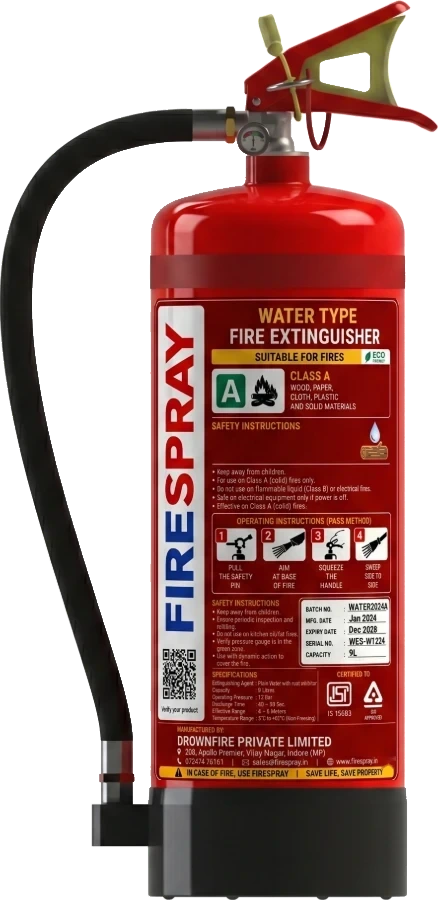
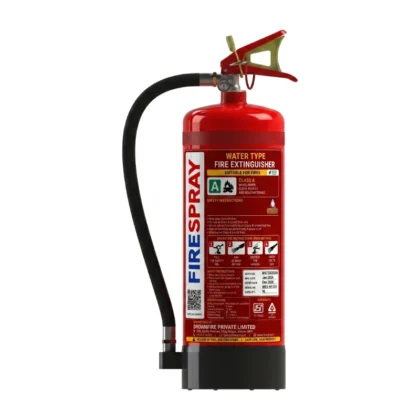
Water and water mist fire extinguishers for Class A fires in wood, paper and cloth. 6 and 9 litres and 50–100 litre trolleys. 5-year warranty.
Prices from ₹1,040+ GST · 2 products · freight extra
- ISI / BIS certified
- GST invoice
- Pan-India delivery
5-year warrantyEvery unit, in writing
ISI markedIS 15683:2018
Factory-direct priceNo dealer margin
Pan-India deliveryFreight extra · 10-day fault replacement
2 products
Need 10+ units? Get bulk price →Buy water fire extinguishers online
Size guide
Which size water extinguisher do I need?
Pick by the size of the space and the risk. For whole buildings we plan quantity and placement as per IS 2190, free on bulk orders.
What it puts out
For wood, paper and cloth fires
Water cools Class A fires deep inside the material. Do not use it on electrical, oil or gas fires.
A
Solids
Wood, paper, cloth, plastic, furniture
Price list
Water Fire Extinguisher price
| Size | Best for | Price | |
|---|---|---|---|
| 6 L | Offices, schools, shops | ₹1,040+ GST | Buy → |
| 9 L | Warehouses, godowns | ₹1,440+ GST | Buy → |
| Trolley 50 L | Large storage areas | ₹10,400+ GST | Buy → |
| Trolley 100 L | Timber yards, big godowns | ₹23,200+ GST | Buy → |
| Water mist 6 L | Less water damage indoors | ₹4,160+ GST | Buy → |
| Water mist 9 L | Hospitals, offices | ₹4,800+ GST | Buy → |
Prices exclude GST; freight extra as per delivery location. GST invoice with every order.
Compare
Compare with similar options
Not sure this is the right type? Here is when to choose which.
| Type | Best for | Why | Price |
|---|---|---|---|
| Water Fire Extinguisher This page | Offices, schools, warehouses | Wood, paper and cloth fires | from ₹1,040+ GST |
| ABC Fire Extinguisher | Homes, shops, offices, factories | All-round: A, B, C and electrical | from ₹880+ GST |
| Foam Fire Extinguisher | Fuel storage, workshops, godowns | Petrol, diesel and oil fires | from ₹240+ GST |
| CO2 Fire Extinguisher | Electrical panels, meter and DG rooms | No residue, safe on live electrics | from ₹3,680+ GST |
Replace, don't refill
Buy once. Stay protected for five years.
Every FireSpray Water Fire Extinguisher leaves our factory sealed and pressure-tested, and stays that way. No yearly refill bills. If a covered unit fails within 5 years, we replace it.
Water fire extinguisher: used for which fires?
A water fire extinguisher is used only on Class A fires: solid materials such as wood, paper, cloth and cardboard. Water cools the burning material below the point where it can keep burning, which makes it very effective on deep-seated fires in stacks of paper, fabric or timber.
Never use it on electrical, oil or gas fires. Water conducts electricity and can spread burning oil. For mixed risks, see our ABC fire extinguisher range. You can read more about fire classes on the NFPA website.
Water or water mist: which to choose?
We make two types:
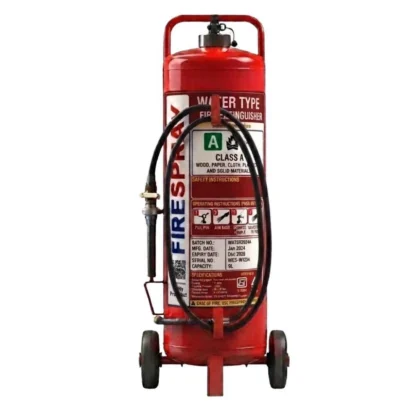
- Water type fire extinguisher in 6 L and 9 L, plus 50 L and 100 L trolleys, for wood, paper and cloth fires.
- Water mist fire extinguisher in 6 L and 9 L. The fine mist cools Class A fires quickly with less water damage.
Water mist uses a fine spray, so less water is left on floors, files and furnishings. It suits offices, schools, libraries, hotels and hospitals. A standard water fire extinguisher suits warehouses, factories, timber yards and textile units, where a larger, heavier stream is helpful.
Which size do you need?
- 6 L: offices, classrooms, shops and corridors.
- 9 L: warehouses, workshops, textile and paper stores.
- 50 L and 100 L trolleys: large godowns, timber yards and open industrial areas.
Water units are simple to use and easy to clean up after, which makes them a good choice where staff have little training. Most buildings keep a water fire extinguisher for Class A areas alongside CO2 or clean agent units for electrical rooms. Placement should be planned as per IS 2190 so a suitable unit is always within reach.
Every unit is ISI marked to IS 15683:2018, filled, sealed and pressure-tested at our factory, and comes with a 5-year warranty from the invoice date.
Prices are shown live above. They exclude GST, and freight depends on your location. Every order comes with a GST invoice, dispatch in 1 to 2 working days, and replacement within 10 days of delivery for a manufacturing fault or transit damage.
Equipping a school, warehouse or factory? Tell us the floor area and what is stored there. For 10 or more units we send a factory quotation, a placement plan as per IS 2190 and free training for your staff. Get a bulk quote.
Related:Fire Extinguisher Cylinder →
Trusted by industry
Protecting sites for India's leading companies












FAQ
Water Fire Extinguisher questions
Can't find your answer? Call or WhatsApp us on +91 72 4747 6161.
All questionsWhat is a water fire extinguisher used for?
Class A fires only: wood, paper, cloth and cardboard. That makes it a good fit for offices, schools and warehouses.
Can a water fire extinguisher be used on electrical fires?
No. Never use water on electrical, oil or gas fires. Use CO2 or clean agent for electrical fires.
What is the difference between a water and a water mist extinguisher?
Water mist sprays a fine mist that cools the fire quickly and causes less water damage indoors, so it suits hospitals and offices.
What is the price of a 9 litre water fire extinguisher?
FireSpray water fire extinguisher prices are shown live on this page, plus GST. Freight is extra as per delivery location.
Other fire risks
View all products →