
For server rooms, panels and labs
Clean Agent Fire Extinguisher safe on electronics
Clean agent fire extinguishers put out fires with a gas that leaves no residue: the right choice for server rooms, electrical panels and electronics. 1 to 6 kg, stainless steel option, 5-year warranty.
Prices from ₹3,200+ GST · 4 products · freight extra
- ISI / BIS certified
- GST invoice
- Pan-India delivery

5-year warrantyEvery unit, in writing
ISI markedIS 15683:2018
Factory-direct priceNo dealer margin
Pan-India deliveryFreight extra · 10-day fault replacement
4 products
Need 10+ units? Get bulk price →Buy clean agent fire extinguishers online
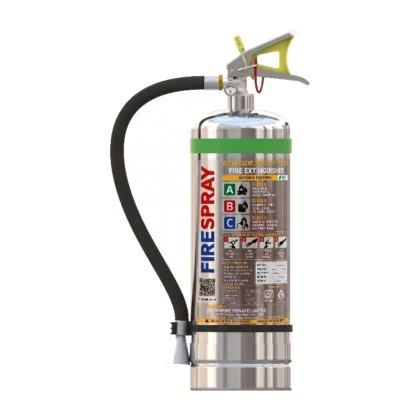
Clean Agent (SS Body) Fire Extinguisher
ISI marked5-yr warranty
from ₹4,200+ GST₹4,5007% off
Choose size 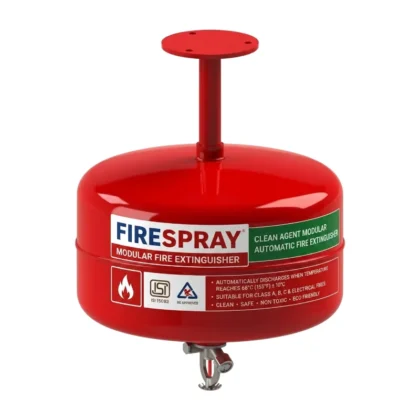
Modular (Clean Agent) Fire Extinguisher
ISI marked5-yr warranty
from ₹15,000+ GST₹18,00017% off
Choose size 
Modular (Clean Agent SS) Fire Extinguisher
ISI marked5-yr warranty
from ₹22,500+ GST₹25,00010% off
Choose size Size guide
Which size clean agent extinguisher do I need?
Pick by the size of the space and the risk. For whole buildings we plan quantity and placement as per IS 2190, free on bulk orders.
What it puts out
Safe on electronics, works on A, B and C fires
A clean agent evaporates completely, so it puts out the fire without damaging servers, panels or equipment.
A
Solids
Wood, paper, cloth, plastic, furniture
B
Liquids
Petrol, diesel, oil, paint, solvents
C
Gases
LPG, PNG and other flammable gases
⚡
Electrical
Wiring, panels and appliances (switch off power first if safe)
Price list
Clean Agent Fire Extinguisher price
| Size | Best for | Price | |
|---|---|---|---|
| 1 kg | Cabins, small panels | ₹3,200+ GST | Buy → |
| 2 kg | UPS and panel rooms | ₹5,800+ GST | Buy → |
| 4 kg | Server rooms, control rooms | ₹7,200+ GST | Buy → |
| 6 kg | Data centres, labs | ₹11,300+ GST | Buy → |
| SS body 2 kg | Hospitals, premium interiors | ₹7,000+ GST | Buy → |
| Modular 5 kg | Unmanned server rooms (automatic) | ₹15,000+ GST | Buy → |
Prices exclude GST; freight extra as per delivery location. GST invoice with every order.
Compare
Compare with similar options
Not sure this is the right type? Here is when to choose which.
| Type | Best for | Why | Price |
|---|---|---|---|
| Clean Agent Fire Extinguisher This page | Server rooms, labs, data centres | No residue, safe for electronics | from ₹3,200+ GST |
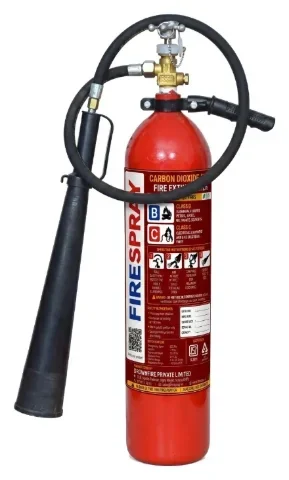
| CO2 Fire Extinguisher | Electrical panels, meter and DG rooms | No residue, safe on live electrics | from ₹3,800+ GST |
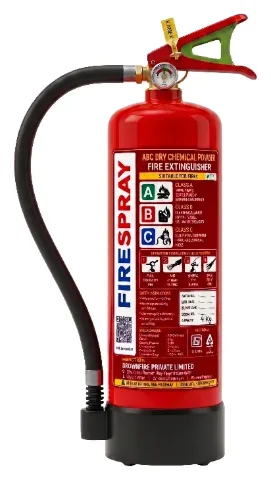
| ABC Fire Extinguisher | Homes, shops, offices, factories | All-round: A, B, C and electrical | from ₹700+ GST |
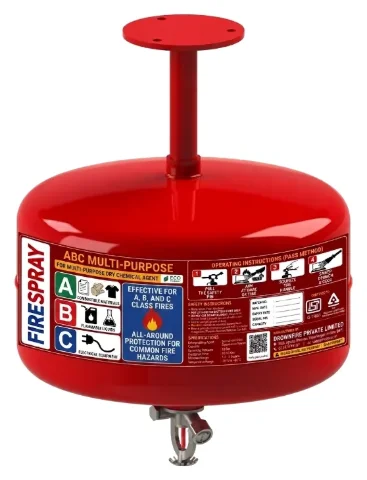
| Modular Fire Extinguisher | Parking, stores, server rooms | Automatic, ceiling mounted | from ₹4,250+ GST |
Replace, don't refill
Buy once. Stay protected for five years.
Every FireSpray Clean Agent Fire Extinguisher leaves our factory sealed and pressure-tested, and stays that way. No yearly refill bills. If a covered unit fails within 5 years, we replace it.
What is a clean agent fire extinguisher?
A clean agent fire extinguisher discharges an agent that evaporates completely after use. It leaves no powder, water or residue, so it does not damage servers, control panels, medical equipment or other electronics. It works on Class A, B and C fires and on live electrical equipment.
That makes it the usual answer to the question "which fire extinguisher is used for a server room?". Powder can ruin circuit boards, and water conducts electricity. A clean agent puts the fire out and lets the equipment be cleaned and checked quickly.
Where to use a clean agent fire extinguisher, and which size
Typical places to keep one:
- Server rooms and data centres: racks, network cabinets and UPS areas.
- Electrical panels and control rooms: switchboards, PLC panels and meter rooms.
- Hospitals and labs: rooms with monitors, scanners and sensitive instruments.
- Offices and premium interiors: reception desks, boardrooms and archives where a mess is not acceptable.
The portable models come in 1 kg, 2 kg, 4 kg and 6 kg. Choose 1 kg or 2 kg for a single panel, cabin or vehicle, 4 kg for a small server room or office floor, and 6 kg for larger electrical rooms. For unmanned rooms, add an automatic clean agent modular unit on the ceiling, in 5 kg or 10 kg.
Our range and why buy from FireSpray
Pick the model that suits the site:
- Clean agent fire extinguisher in a red cylinder, for panels, servers and electronics.
- Clean agent SS body model, a stainless steel cylinder for data centres, hospitals and premium interiors.
- Clean agent modular unit that works on its own when heat breaks the glass bulb.
Every clean agent fire extinguisher we sell is ISI marked to IS 15683:2018 (see BIS product certification), filled, sealed and pressure-tested at our factory. Each unit carries a 5-year warranty from the invoice date.
Prices for every size are shown live above. They exclude GST, freight depends on your location, and every order comes with a GST invoice. Orders are dispatched in 1 to 2 working days, and a unit that arrives damaged or with a manufacturing fault is replaced within 10 days of delivery.
Protecting a whole building or data centre? For 10 or more units we send a factory quotation, a placement plan as per IS 2190 and free training for your staff. Get a bulk quote.
Trusted by industry
Protecting sites for India's leading companies












FAQ
Clean Agent Fire Extinguisher questions
Can't find your answer? Call or WhatsApp us on +91 72 4747 6161.
All questionsWhat gas is used in a clean agent fire extinguisher?
A clean extinguishing gas that leaves no residue. The exact agent is printed on the cylinder label.
Is a clean agent extinguisher safe for electronics?
Yes. It leaves no powder or water, which is why it is used for servers, panels and labs.
Other fire risks
View all products →