
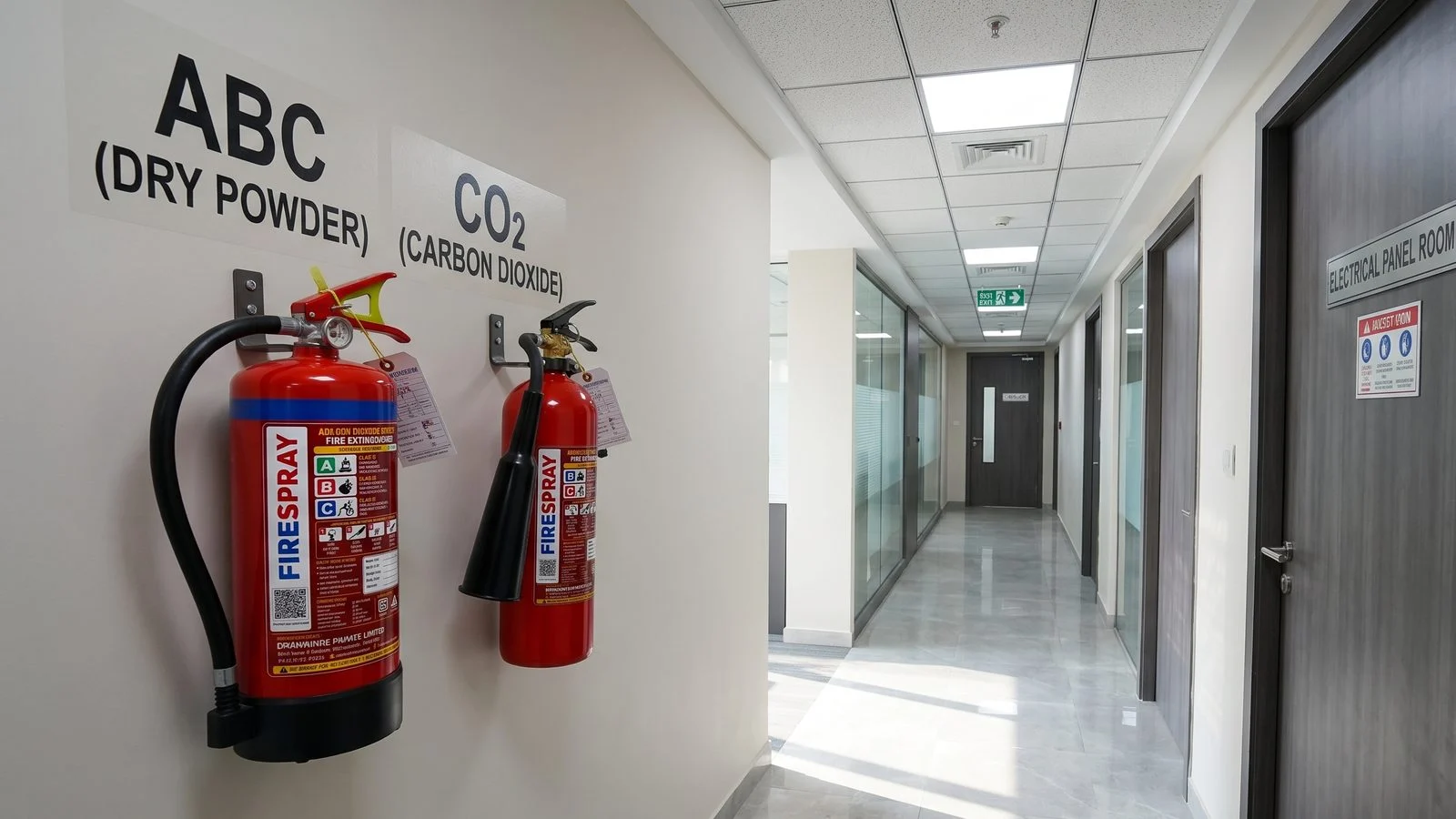
ABC and CO2 are the two fire extinguishers most Indian homes, shops, offices and societies end up choosing between. Both are red, both say “suitable for electrical fires”, and both are sold everywhere, so the difference is easy to miss. Pick the wrong one and it either leaves a mess on expensive equipment or fails to put out a fire that keeps relighting.
This guide explains how each one works, which fires each one is good and bad at, and which to keep where.
The short answer
- ABC is the all-rounder. Choose it for homes, corridors, shops, offices, parking, godowns and vehicles: anywhere the fire could be paper, wood, cloth, plastic, fuel, gas or wiring.
- CO2 is the specialist. Choose it for electrical panels, meter rooms, server rooms, labs and expensive electronics, where you want the fire out without any residue.
- Most buildings need both: ABC as the main unit, CO2 next to the electrical and electronic risks.
How an ABC fire extinguisher works
An ABC extinguisher holds a fine dry chemical powder (mono ammonium phosphate) pushed out by stored pressure. The powder breaks the chemical reaction of the fire and, on solid materials, melts into a crust that stops them from re-igniting. That is why one unit covers:
- Class A: solids such as wood, paper, cloth, rubber and plastic.
- Class B: flammable liquids such as petrol, diesel, paint and thinner.
- Class C: flammable gases such as LPG and PNG leaks.
- Electrical fires, because the powder does not conduct electricity.
The catch is the cleanup. The powder spreads over the whole room, gets into electronics and is mildly corrosive, so it can damage computers, panels and machines that the fire never touched. It also cuts visibility for a few seconds in a small room.
How a CO2 fire extinguisher works
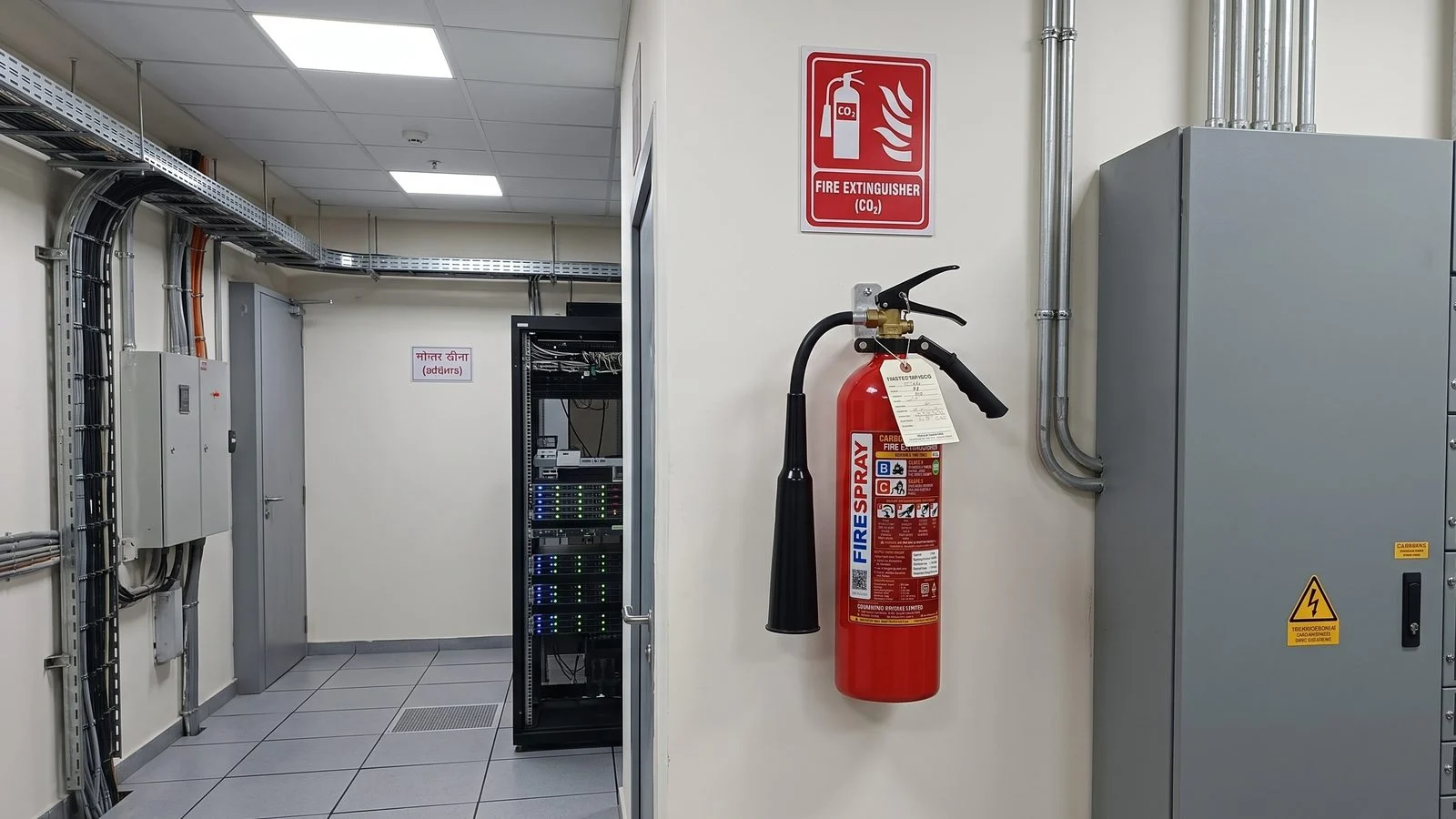
A CO2 extinguisher holds carbon dioxide as a liquid under high pressure. When you squeeze the handle it comes out of the horn as a very cold gas that pushes the oxygen away from the fire and smothers it. It then simply disappears into the air.
- Good on: electrical and electronic fires (it does not conduct and leaves nothing behind) and small flammable liquid fires.
- Weak on Class A: CO2 does not cool or coat burning wood, paper or cloth, so they can glow on and relight once the gas drifts away.
- Weak outdoors: wind blows the gas away before it can smother the fire.
- Short range: you need to be within a metre or two of the fire.
ABC vs CO2 compared
| ABC dry powder | CO2 | |
|---|---|---|
| Wood, paper, cloth (Class A) | Yes | Not recommended |
| Petrol, diesel, paint (Class B) | Yes | Yes, small fires |
| LPG and gas (Class C) | Yes | No |
| Electrical and live wiring | Yes | Yes, best choice |
| Computers, servers, panels | Works, but powder damages them | Yes, no residue |
| Cooking oil (kitchen) | No, use K-type | No, use K-type |
| Cleanup after use | Powder everywhere | Nothing to clean |
| Outdoors and windy places | Works well | Gas blows away |
| Weight for the same size | Lighter cylinder | Heavier, high-pressure cylinder |
Neither is right for a cooking oil fire in a kitchen: that needs a wet chemical K-type unit. See our kitchen extinguisher guide. For EV and inverter batteries, see the lithium battery fire guide.
Which one to keep where
| Place | Choose |
|---|---|
| Home living area, bedroom corridor | ABC 2 to 4 kg |
| Car, bike, auto | ABC 1 to 2 kg |
| Shop, showroom, godown | ABC 4 to 6 kg |
| Society lobby, staircase, parking | ABC 6 kg |
| Meter room, DB, electrical panel | CO2 4.5 kg |
| Server room, UPS room, lab | CO2 4.5 kg |
| Office floor with computers | ABC on the floor, CO2 next to the server and UPS |
| DG set room | CO2 for the panel, ABC for diesel |
| Factory or workshop | ABC 6 to 9 kg, CO2 at the panels |
Browse the ABC fire extinguisher and CO2 fire extinguisher ranges for current prices.
Using each one safely
- Both: follow PASS: pull the pin, aim at the base of the fire, squeeze the handle, sweep side to side. Keep your back to an exit.
- CO2 horn gets freezing cold. Hold the extinguisher by its handle and the horn by its insulated grip only; never touch the metal or the horn tip with bare hands.
- CO2 in small rooms: the gas pushes out oxygen for people too. After using it in a closed panel room or cabin, step out and let the room air out before going back in.
- ABC indoors: after use, ventilate the room and clean the powder from electronics soon, because it absorbs moisture and corrodes.
- Refill after any use, even a short burst.
Frequently asked questions
What is the difference between ABC and CO2 fire extinguishers?
ABC uses a dry chemical powder that works on solids, liquids, gases and electrical fires but leaves a residue. CO2 uses carbon dioxide gas that leaves no residue and is best for electrical and electronic fires, but it is weak on wood, paper and cloth fires.
Which is better for home, ABC or CO2?
ABC is better for most homes, because a home fire usually involves furniture, cloth or paper as well as wiring. A small CO2 unit is a useful extra next to a home office, inverter or electrical board.
Can a CO2 extinguisher be used on electrical fires?
Yes. CO2 does not conduct electricity and leaves no residue, which makes it the first choice for electrical panels, meter rooms, servers and electronics. Switch off the power first if it is safe to do so.
Can an ABC extinguisher be used on electrical fires?
Yes. ABC powder does not conduct electricity, so it is safe on electrical fires. The powder can damage computers and panels, so CO2 is preferred where expensive electronics are involved.
Why is a CO2 extinguisher not good for paper and wood fires?
CO2 smothers a fire but does not cool it or coat the fuel. Burning paper, wood or cloth can keep glowing inside and flare up again once the gas drifts away. ABC powder coats the material and stops it from re-igniting.
Can ABC or CO2 be used on a kitchen oil fire?
No. A burning pan of oil needs a K-type wet chemical extinguisher, which cools the oil and forms a layer on top. Powder or gas can splash burning oil and the fire can relight.